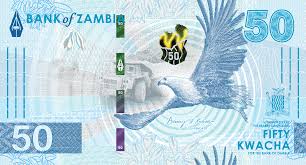
Zambia’s Kwacha leads global currencies as Lusaka Stock Exchange climbs to World’s No. 2
Zambia is emerging as a standout in global markets, with the kwacha leading the world’s currency performance and the Lusaka Securities Exchange ranking among the top two stock markets worldwide. Strong copper prices, improved energy supply and policy reforms are boosting investor confidence in the Southern African economy.
By Sarah Johnson • 1/17/2026
Zambia is capturing international investor interest as its financial markets deliver standout performance in 2026. The Zambian kwacha has emerged as one of the world’s best-performing currencies, while the Lusaka Securities Exchange (LuSE) ranks among the top two stock markets globally — a remarkable achievement for a frontier economy long overshadowed by larger peers.
The dual market surge reflects a convergence of factors — from soaring copper prices to structural economic reforms — that are reshaping Zambia’s macroeconomic narrative from perennial underdog to a frontier market that is delivering compelling returns.
Copper boom underpins currency strength and market gains
Copper remains the backbone of Zambia’s foreign exchange earnings, accounting for a substantial share of export revenue. Record prices on the global market — with copper trading above $13,000 per ton — have shored up the nation’s terms of trade, underpinning broader economic resilience.
As a result, the Zambian kwacha has strengthened by roughly 12 % against the US dollar in early 2026, making it the best-performing currency among major tracked currencies worldwide in the year to date.
Currency gains of this magnitude have a ripple effect across the economy:
- Import costs become more manageable when the local currency holds value.
- External debt service in foreign currency becomes relatively cheaper.
- Investor confidence increases as volatility recedes.
This sets Zambia apart from many emerging markets in Africa, where exchange rate volatility has often weighed on financial stability.
LuSE posts near-double-digit dollar gains
The Lusaka Securities Exchange benchmark index has climbed nearly 17 % in US dollar terms in early 2026, placing it second only to a small European bourse among the world’s best-performing markets tracked by Bloomberg and other global equity watchers.
This achievement marks an extraordinary turnaround for Lusaka equity valuations, which have historically lagged behind larger African exchanges such as those in South Africa, Nigeria or Kenya.
Factors driving LuSE’s performance include:
- Record commodity prices, especially copper.
- Improved energy supply, reducing production bottlenecks.
- Recovery in agriculture after drought setbacks in previous years.
- Select stocks in key sectors — such as Zambia Sugar Plc, Standard Chartered Zambia and Pamodzi Hotels Plc— posting strong gains.
The combination of external demand for commodities and internal policy support has helped local equities outperform many larger emerging markets in 2026.
Policy reforms and investor confidence
Zambia’s improved market performance is also linked to macroeconomic reforms that have strengthened investor sentiment after years of economic challenges, including prolonged debt restructuring. These reforms, often supported by multilateral partners, have helped restore credibility to Zambia’s economic management and encouraged both domestic and foreign investment inflows.
Though Moody’s and other credit agencies still rate Zambian sovereign debt below investment grade, the performance of local markets suggests that financial actors are increasingly looking past headline credit metrics to underlying fundamentals.
Further enhancing outlooks, Zambia is engaging in conversations about currency swap arrangements with China to reduce reliance on the US dollar and cut debt servicing costs, particularly in mining taxation — a move that could further reinforce FX stability and investor appetite.
Zambia’s economic trajectory in context
While Zambia’s financial metrics are gaining global attention, economists emphasize that sustaining these gains will require deeper structural shifts, including:
- Diversification beyond copper into manufacturing and services.
- Expansion of the domestic investor base.
- Strengthened institutional quality to support long-term capital formation.
Nevertheless, the early 2026 data send a clear message: frontier markets like Zambia can deliver outsized returns when export conditions, policy orientation and investor confidence align.
For global investors searching for opportunities outside traditional emerging markets, Zambia’s twin performance in currency and equities offers a compelling case study in how commodity-rich economies can leverage comparative advantages to punch above their economic weight class.
Tags:
Zambiaemerging marketsKwachaLusaka Securities Exchange