Zimbabwe to shift monetary policy focus towards money supply
Zimbabwe is adjusting its monetary policy playbook, signaling a move toward money supply management as inflation cools and concerns grow over high borrowing costs.
By Sarah Johnson • 1/6/2026
Zimbabwe’s central bank has signaled a strategic shift in how it manages the economy, announcing plans to place greater emphasis on controlling the money supply while maintaining its commitment to curbing inflation.
The policy direction was outlined in the Reserve Bank of Zimbabwe’s newly published five-year strategic plan, released on Monday. The bank described the move as a transition “from a tight to prudent monetary policy thrust,” suggesting a more flexible approach as inflationary pressures continue to ease.
According to the plan, future policy decisions will be “calibrated to reflect emerging inflationary pressures and the crystallization of any inflation risks,” indicating that authorities are seeking to balance price stability with economic activity.
Interest rates remain high, but pressure is building
While the central bank did not provide specific guidance on the future path of interest rates, it acknowledged growing concerns from businesses about the cost of borrowing. Companies told policymakers that local interest rates were “potentially prohibitive,” a sign that tight financial conditions may be constraining investment and growth.
Last month, the central bank kept its benchmark interest rate unchanged at 35%, citing the need to maintain downward pressure on inflation and support the country’s gold-backed currency, the ZiG.
Inflation shows signs of sustained cooling
Zimbabwe’s inflation picture has improved markedly in recent months. Official data show month-on-month inflation slowed to 0.2% in December, while annual inflation eased to 15%, down from 19% in November.
The central bank said it expects disinflation to continue, projecting that inflation will fall into single digits at some point in 2026. If achieved, that would mark a significant milestone for an economy that has long struggled with price instability.
ZiG Currency Central to Policy Direction
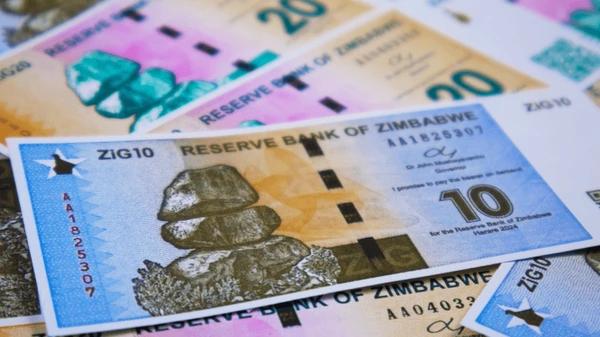
The ZiG currency, launched in 2024, remains central to Zimbabwe’s monetary strategy. It is the country’s latest attempt to establish a functional domestic currency after previous units collapsed under hyperinflation and loss of confidence.
Supporting the ZiG has required tight monetary conditions, including elevated interest rates and strict liquidity controls. The central bank reiterated that these measures are designed to anchor expectations and prevent excess money creation.
Gradual move away from Dollar dependence
Despite these efforts, Zimbabwe remains heavily dollarized. The central bank estimates that more than half of all transactions in the economy are still conducted in U.S. dollars.
Officials said the transition away from dollar reliance will be largely market-driven, rather than enforced through sweeping controls. However, the bank emphasized that it will focus on creating the economic conditions necessary for a successful shift.
These conditions include low and stable inflation, adequate foreign exchange reserves, resilient financial and payment systems, an efficient exchange rate framework, and stronger alignment between monetary and fiscal policy.
A Delicate Balancing Act ahead
The shift toward managing money supply reflects a recognition that Zimbabwe’s economic recovery requires more than aggressive tightening. With inflation easing and growth pressures mounting, policymakers appear to be preparing for a more nuanced phase of monetary management.
How quickly the central bank can ease financial conditions without reigniting inflation will be a key test in the months ahead. For businesses and households, the direction of interest rates and currency stability will remain critical indicators of whether Zimbabwe’s long-running monetary reforms are finally gaining traction.
Tags:
Zimbabwe economymonetary policyinflationmoney supplyAfrican marketsZiG currency