
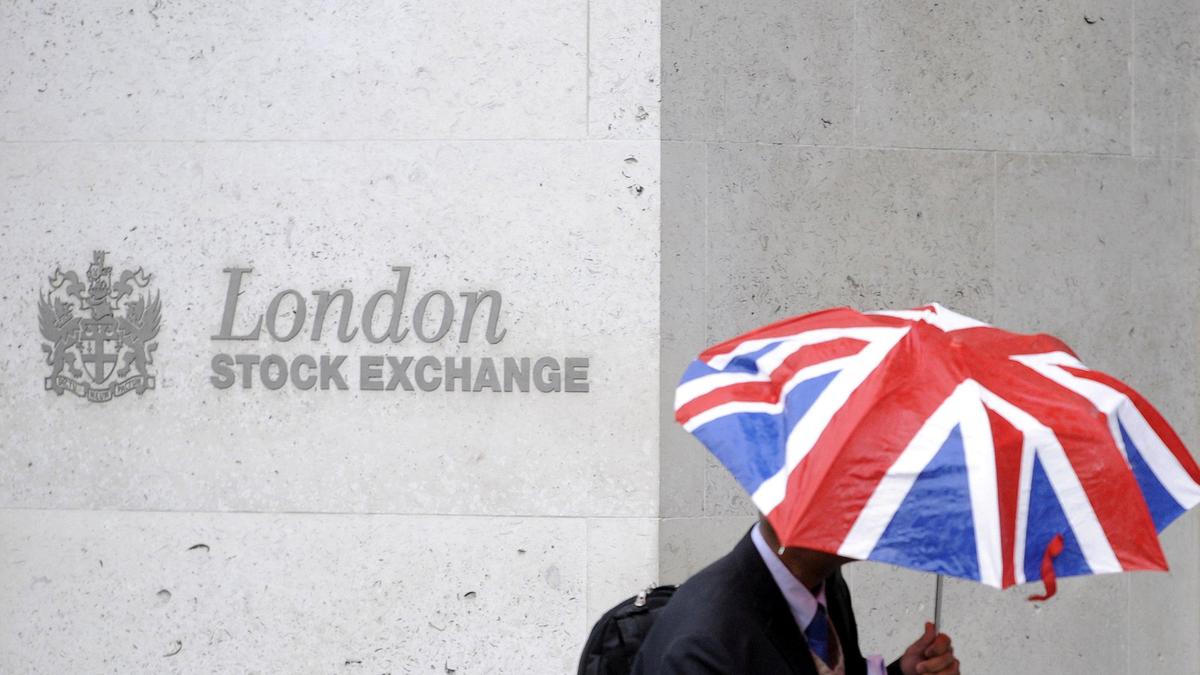
London Stock Market breaks 10,000-point barrier for the first time
London’s FTSE 100 has crossed the 10,000-point mark for the first time, capping its strongest annual performance in 16 years as rate cuts, rising gold prices, and global market momentum lifted UK equities.
By Sarah Johnson • 1/2/2026
London’s benchmark FTSE 100 index crossed the 10,000-point threshold for the first time in its history on Friday, extending a powerful rally that made 2025 its strongest year in more than a decade.
In early trading on the first session of 2026, the index climbed as much as 1% to an all-time intraday high of 10,046 points, before easing back to close just below the landmark level. Even so, the brief move above 10,000 marked a psychologically significant milestone for UK equities.
The FTSE 100 ended 2025 more than 21% higher, its best annual performance in 16 years, rising from roughly 8,260 points at the start of the year.
Rate cuts and global momentum drive the Rally
The index’s strong performance was underpinned by falling interest rates in the UK, alongside easing borrowing costs in the United States, as inflation pressures cooled across major economies.
Global stock markets also enjoyed a banner year in 2025, with many indices hitting all-time highs and posting double-digit gains, creating favourable conditions for risk assets worldwide.
Despite concerns over stretched valuations in US technology stocks, the FTSE 100 outperformed major American indices last year, benefiting from its heavy exposure to commodities, financials, and defensive sectors.
Gold Miners and Industrials Lead Gains
One of the standout contributors to the index’s surge has been the mining sector, particularly precious metals producers. Shares of Fresnillo, the gold and silver miner, soared 436% in 2025, as gold prices repeatedly hit record highs. Other miners such as Rio Tinto also benefited from strong commodity prices.
Defence firms including Babcock and Rolls-Royce gained from rising global military spending amid heightened geopolitical tensions, while financial stocks and insurers provided steady support to the index. Retail names such as Currys and Next also posted strong gains, reflecting resilient consumer demand despite lingering economic uncertainty.
Why the FTSE 100 is different
The FTSE 100 tracks the 100 largest companies listed on the London Stock Exchange, many of which generate the bulk of their revenue overseas. Roughly three-quarters of FTSE 100 revenues come from outside the UK, meaning the index is not a direct barometer of domestic economic health.
Instead, its global exposure has helped it perform well during periods of sterling weakness, commodity strength, and international growth.
Investor sentiment turns back to London
Market commentators say the index’s move above 10,000 reflects renewed investor interest in UK equities.
Susannah Streeter, an independent financial commentator, described the level as a “psychologically important milestone”, noting that London’s blue-chip stocks have come back into favour as investors reassess the high valuations of US technology shares.
Dan Coatsworth, head of markets at AJ Bell, said the rally was a timely boost for the UK government, particularly Chancellor Rachel Reeves, who has encouraged investors to shift savings from cash into productive assets like equities.
“While the FTSE 100 is sometimes dismissed as old-fashioned, its mix of banks, miners, utilities and consumer staples appeals to investors looking for stability in uncertain times,” he said.
What the 10,000-Point mark means
Crossing 10,000 points is symbolically important, but analysts stress it does not guarantee future gains. Still, the milestone highlights how a combination of rate cuts, commodity strength, and global diversification has reshaped the investment case for UK stocks.
For pension holders and long-term investors, the rally underscores the role of equities in building wealth, especially during periods when inflation and interest rates begin to ease.
As trading resumes in 2026, investors will be watching whether the FTSE 100 can hold above the 10,000 level and extend its momentum, or whether profit-taking tempers the rally after a historic run.
Tags:
FTSE 100London Stock ExchangeUK stocks